
What is the drawbar load, how do I measure it, and how do I ensure I stay within the limit?
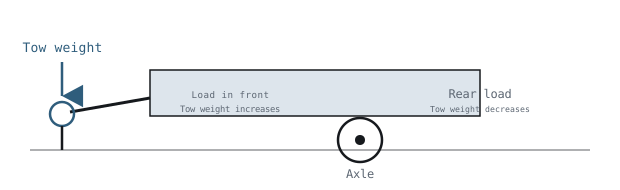
The drawbar load is the weight with which the drawbar rests on the ball of the trailer coupling. It is determined by the distribution of the load: a load in front of the axle increases the drawbar load, whilst a load behind it reduces it.
Three values are relevant, and the lowest one applies: the permissible drawbar load of the trailer, that of the tow bar, and that of the towing vehicle. Typical values for car trailers range between 50 and 100 kg.
The minimum value is 4 per cent of the actual trailer load. An insufficient drawbar load is dangerous — the combination is prone to swaying. Too much overloads the coupling and the rear axle.
How to measure the drawbar load: with the trailer uncoupled and positioned horizontally, use a drawbar load scale. Place the scale under the coupling, lower the trailer to coupling height and read the value. It is important that the trailer is horizontal — a trailer that is at an angle will show an incorrect reading.
Even more convenient: there are support wheels with an integrated drawbar weight gauge. The display is built directly into the support wheel — you can see the drawbar weight as you wind the wheel up and down, without having to fetch an additional device. This is the most practical solution for anyone who frequently loads their trailer differently.
A rule of thumb when loading: place heavy items over or just in front of the axle, not right at the back. A trailer loaded at the rear handles unsteadily, even if the total weight is correct. Check the drawbar load again after reloading.

