Unsteady Trailers, Lost Time, and Unnecessary Risks: Why Proper Support Systems Matter
You're in a hurry—perhaps a sudden downpour is on the horizon or your schedule is packed. As you attempt to unhitch your loaded trailer on a patch of gravel, the nose tips uncomfortably forward. Instantly, your heart races. Will the trailer tip? Will your cargo shift? It’s a scenario many trailer owners know all too well, but one that’s entirely preventable with the right stabilization wheels and support brackets.
Trailer stability isn’t just about convenience; it’s about safety for you, your team, and your valuable cargo. Whether you’re a craftsman shuttling tools, a contractor moving heavy loads, or a boating enthusiast parking on riverbanks, a moment’s lapse in support can mean costly repairs, downtime, or worse, an accident. Yet, with thoughtful choices—like matching support wheel tube diameters to your trailer weight, or opting for corrosion-resistant galvanized landing gear—you gain peace of mind, every single time you park or load.
Benefits of Innovative Support Wheels and Stabilizing Assemblies
What sets modern auxiliary supports apart from basic solutions? It’s the combination of engineering, materials, and ease of use. Premium support wheels feature:
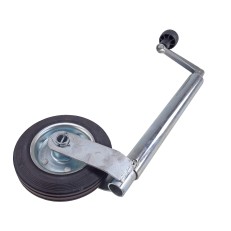
- Exceptional Load Capacities: From lightweight garden trailers (up to 150 kg) to heavy-duty utility vehicles (up to 500 kg), you’ll find mounting wheels engineered for every scenario.
- Precision Adjustment: Many stabilizing legs and trailer stands offer incremental height settings, compensating for uneven terrain—no more wobbly setups.
- Weatherproof Durability: Galvanized steel, robust rubber, and advanced anti-corrosion finishes ensure your stabilization equipment remains functional after countless rainy mornings and salted winter roads.
- Effortless Maneuverability: Automatic jockey wheels and multi-directional support assemblies help you reposition even heavy trailers with minimal physical effort.
Take the example of a tradesman using a 2.5-ton flatbed: With a 60 mm heavy-duty support wheel and reinforced clamp, unloading becomes steady and controlled, even on sloped surfaces. For lighter boat trailers, a 35 mm support wheel with pneumatic tires rolls smoothly over soft ground, making beachside launches a breeze.
Sicherheit beim Be- und Entladen: Starke Unterstützungen Schützen Mensch und Material
Every year, thousands of accidents happen during trailer loading and parking—often because of inadequate or worn-out stabilization equipment. High-quality support brackets, reliable landing gear, and solid stabilizer supports are your frontline defense. Here’s how they safeguard your operation:
- Stability During Loading: Properly fitted wheel supports prevent sudden tipping or rolling.
- Secure Stationary Parking: Adjustable support legs anchor your trailer during rest stops or storage, even on sloped ground.
- Reduced Risk of Injury: Ergonomic crank handles and fast-lock clamps minimize strenuous lifting and awkward movements.
- Compliance with Safety Standards: Many advanced auxiliary supports meet or exceed EN 12195-1 and DIN 74054 standards for commercial transport.
Practical example: On an icy construction site, a reinforced 48 mm stabilization wheel with a wide-tread rubber tire maintains grip and support, preventing dangerous slips—keeping both your team and your cargo safe.
Applications: Support Solutions for Every Trailer Type and Terrain
Trailer stabilization systems are as varied as the industries that depend on them. Whether you’re hauling construction materials, transporting boats, or making commercial deliveries, choosing the right combination of mounting wheels and support accessories makes all the difference.
- Utility Trailers: Jockey wheels with pneumatic tires excel on uneven ground, while fixed stands provide steadfast support during loading.
- Boat Trailers: Corrosion-resistant support legs withstand repeated immersion and salt exposure.
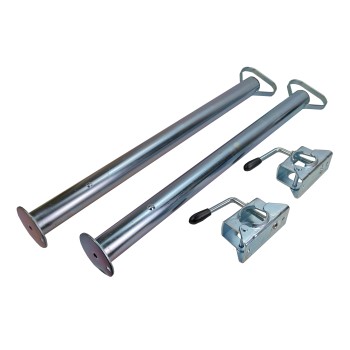
- Commercial Cargo: Heavy-duty landing gear (60 mm tube diameter) supports higher weights and frequent stops.
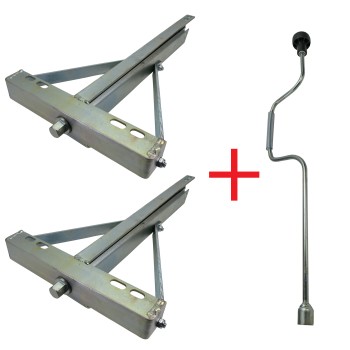
- Caravans and Campers: Foldable outriggers and compact wheel supports ensure safe, stable rests even on mountain campgrounds.
Consider a landscape gardener using a twin-axle trailer with foldable support legs and a reinforced auxiliary clamp: The result is confident, stable parking on grassy verges—no more sunken wheels or tipping hazards.
Practical Tips: Maximizing the Benefits of Your Stabilization Equipment
- Choose the Right Tube Diameter: For trailers under 750 kg, a 35 mm support wheel usually suffices; for loads up to 1500 kg, opt for 48 mm; for heavy commercial use, select 60 mm models with reinforced clamps.
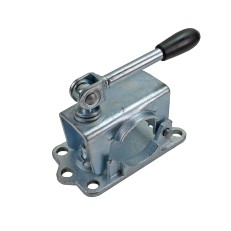
- Always Double-Check Fastenings: Ensure clamps and mounting brackets are tightened to the manufacturer’s recommended torque—loose fittings can lead to instability.
- Distribute Load Evenly: Before loading or unloading, check that your stabilizer supports are in full contact with firm ground to avoid sudden tipping.
- Regularly Inspect for Wear: Replace worn tires, corroded brackets, or bent crank handles immediately to prevent unexpected failures.
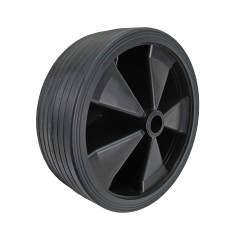
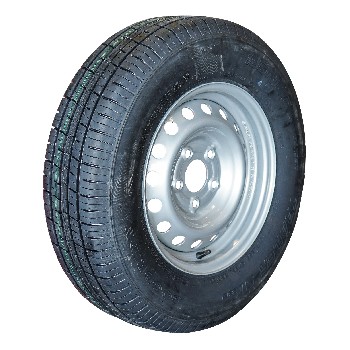
- Use Spare Parts Proactively: Keep a spare rubber wheel or crank handle on hand to minimize downtime during trips.
Illustration: On a cross-country road trip with a camping trailer, a customer swapped a punctured pneumatic wheel for a solid rubber spare in minutes—avoiding delay and keeping the family adventure on track.
Technical Details and Quality Features: What Sets Premium Support Assemblies Apart
Not all stabilization wheels and support brackets are created equal. Here’s what distinguishes truly reliable products:
- Materials: Hot-dip galvanized steel resists rust, while UV-stabilized rubber ensures longevity in harsh conditions.
- Load Ratings: Clearly marked on each item—e.g., 48 mm nose wheels often support up to 300 kg; 60 mm heavy-duty models up to 500 kg.
- Maintenance Simplicity: Grease fittings on crank handles and wheels allow for easy upkeep, extending the product life by years.
- Universal Fit: Modular accessories and multiple mounting holes allow most auxiliary supports to adapt to various trailer brands and chassis types.
Example: A tradesperson working in coastal regions praised the anti-corrosion finish of their support legs, which showed no rust even after two seasons of saltwater exposure.
Installation and Maintenance: Ensuring Lasting Performance from Your Wheel Supports
Reliable stabilization starts with correct installation. Follow these best practices:
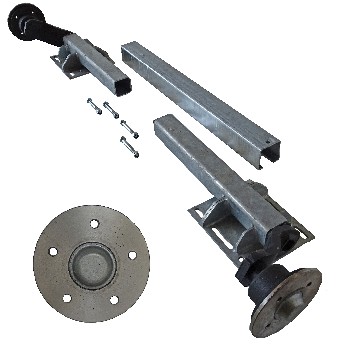
- Securely attach the support wheel or leg to the trailer’s frame, aligning the mounting bracket with pre-drilled holes.
- Tighten all nuts and bolts to the specified torque, using locking washers to prevent loosening during transport.
- Test the mechanism before each use—lower the wheel, check movement, and ensure the trailer remains stable when detached.
- Apply a light layer of grease to moving parts monthly, especially in harsh weather.
- Inspect for cracks, deformation, or corrosion every quarter, replacing parts as needed. Quality spare parts are readily available for most premium models.
Tip: For those frequently using their trailers off-road, consider investing in reinforced mounting wheels and heavy-duty brackets—these stand up better to bumps and vibration.
Conclusion: Secure, Flexible, and Ready for Any Task
Whether you move heavy machinery, precious boats, or everyday cargo, the right stabilization wheels, support legs, and brackets provide the confidence and security you need. Their robust materials, intelligent design, and user-friendly features turn every loading and parking operation from a risky hurdle into a safe, smooth routine. Invest in top-quality support systems and enjoy peace of mind—whatever the terrain, whatever the weather.










 C
C
 C
C
 B | 70db




Comments (0)
back to list Add comment