When a Heavy Trailer Pushes Forward: Why the Right Axle Matters
Imagine this situation: You are towing a fully loaded trailer on a wet morning. The trailer carries a compact excavator, several toolboxes, and additional materials for a busy workday. Traffic slows unexpectedly ahead. You press the brake pedal—and in that split second, everything depends on how well Your trailer responds. If the trailer keeps pushing, sways under deceleration, or reacts unevenly, the journey becomes stressful and potentially dangerous. This is exactly why many professional and private trailer owners pay close attention to the axle and braking setup they choose.
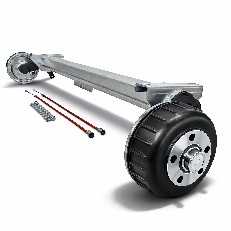
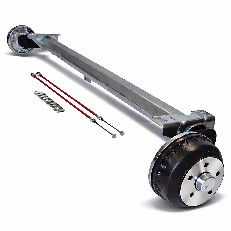
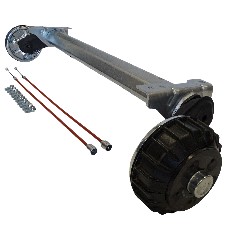
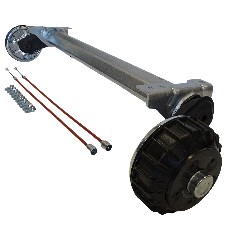
Braked ALKO axles are designed for these real-world moments. They are not just structural parts underneath a trailer; they are essential assemblies that influence control, stopping distance, directional stability, and overall confidence on the road. For utility trailers, car transporters, horseboxes, plant trailers, and many other towing solutions, a reliable braking axle can make a clear difference in both safety and daily usability.
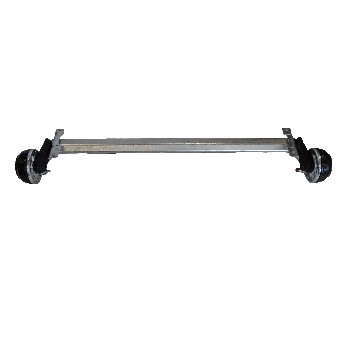
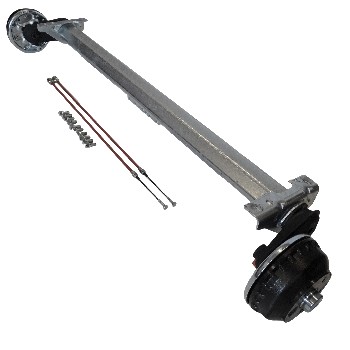
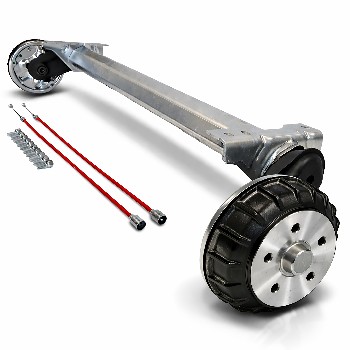
ALKO has long been associated with dependable trailer technology, and that reputation matters when You regularly transport loads between 1000 kg and 1800 kg axle capacity. In this category, You will find equipment engineered to support practical towing needs, with versions in common load classes such as 1000 kg, 1350 kg, 1500 kg, and 1800 kg. Example items in the range include multiple 1350 kg braked B1200-6 variants with support widths from 1000 mm up to 1900 mm, a 5x112 bolt pattern, and a 25° specification, allowing more accurate matching to trailer geometry and body design.
In the following guide, You will learn why these components are such an important investment, where they are most commonly used, which technical details deserve attention, and how proper installation and maintenance help preserve safe, stable performance over time.
Advantages of Braked ALKO Axles
The first major benefit of braked ALKO axles is obvious but crucial: better stopping performance. When towing a loaded trailer, braking force must be managed in a controlled and balanced way. A trailer axle with integrated brakes helps reduce the amount of forward thrust transferred to the towing vehicle during deceleration. This can improve road manners, especially in traffic, on downhill stretches, and during emergency braking situations.
For many users, improved stability is just as valuable as shorter stopping distances. A properly matched braking axle helps a trailer remain more composed under load. This means less tendency to surge, less nervousness when slowing down, and better control during repeated stop-and-go driving. If You transport heavy garden machinery, construction equipment, motorcycles, or a car, that extra sense of composure is more than a technical detail—it reduces fatigue and increases confidence on every journey.
Another key advantage is capacity flexibility. Braked ALKO axle products are available in several common weight classes, allowing You to choose a specification that suits the intended trailer design. A smaller commercial trailer or sturdy utility trailer may work perfectly with a 1000 kg or 1350 kg version. Heavier transport applications often require 1500 kg or 1800 kg assemblies to support the additional demands. Choosing the correct rating is essential because it helps maintain safe reserve capacity and supports proper weight distribution.
Durability is another strong argument. These axle units are built for repeated use in outdoor conditions where moisture, road salt, dirt, and impact exposure are unavoidable. Corrosion-resistant construction and robust material quality are especially important for owners who use trailers all year round. A reliable finish and well-made brake components help preserve performance and reduce the likelihood of premature wear.
Ease of integration also matters in practice. Many trailer builders and repair professionals value ALKO equipment because it is designed with fitment logic and workshop practicality in mind. When dimensions such as support width, bolt pattern, and brake specification are correctly selected, installation can be straightforward. This is particularly beneficial for trailer refurbishment projects where downtime must be kept low.
Finally, low-maintenance operation contributes to long-term value. While every braked trailer system requires regular inspection, a well-engineered axle with a durable brake assembly can help reduce service interruptions and support predictable upkeep costs. For businesses managing fleets or tradespeople relying on a single work trailer, that reliability is often just as important as the initial purchase decision.
Safety When Using in Trailer Applications
Safety is the central reason to choose a braked axle system, and it becomes even more important when the trailer is used in demanding applications. Whether You tow construction materials, landscaping machinery, a race car, horses, or bulk goods, the axle and brake system form a vital part of the trailer’s active safety setup.
One of the most important safety factors is load control under braking. A loaded trailer has momentum, and that momentum increases significantly with every extra kilogram. At motorway speed, even a well-balanced trailer can become difficult to manage if the braking system is poorly matched or worn. Brake-equipped ALKO axles help distribute deceleration forces more effectively, contributing to smoother braking behaviour and better line stability.
This matters particularly on descents. Consider a trailer descending a 10% or 12% gradient while carrying paving stones, a compact ride-on mower, or a small vehicle. Without effective trailer braking, the towing vehicle may feel as if it is being pushed downhill. That reduces driver comfort and can increase risk, especially in wet or uneven conditions. An integrated braking axle helps manage this force and supports more predictable slowing behaviour.
Safe towing also depends on compatibility. The trailer axle rating must suit the gross trailer weight, and the mounting arrangement must match the chassis design. Using under-rated parts or mixing incompatible components can compromise braking efficiency, tyre wear, alignment, and overall stability. This is why checking support dimensions, hub pattern, brake type, and suspension compatibility is essential before installation.
Another critical issue is even load distribution. Even the best axle assembly cannot compensate for poor loading habits. Heavy cargo should be positioned so that nose weight and axle load remain within approved limits. If too much weight sits behind the axle line, the trailer may become unstable at speed. If too much weight presses forward, coupling and towing dynamics may suffer. A braked ALKO axle performs best when combined with correct loading practice and suitable tyres.
Regular inspection is equally important. Brake linkages, cables, drums, bearings, wheel fixings, and tyre condition should all be checked at sensible intervals. A trailer used weekly for commercial work requires more frequent attention than a recreational trailer used a few times each season. In practical terms, it is wise to inspect visible brake and running gear components before every major journey, especially if the trailer will travel long distances or carry high-value loads.
If horses or livestock are being transported, braking smoothness becomes more than a comfort issue—it is a welfare consideration. Abrupt trailer movement can cause stress or instability for animals inside. In these applications, dependable braking behaviour supports a calmer ride and safer handling. For vehicle transporters, stable braking helps protect both the load and surrounding traffic. For utility trailers in domestic use, it helps reduce the risk of frightening sway or harsh push effects during sudden stops.
In short, these parts contribute to a broader safety chain: correct specification, careful installation, proper loading, routine inspection, and sensible driving all work together. The axle itself is a key component—but its true value is realised when the entire trailer system is treated with the same level of care.
Areas of Use and Application
Braked ALKO axles are used in a wide variety of trailer categories because their combination of braking performance, robust construction, and configuration choice suits many everyday and specialist transport tasks.
Utility trailers are among the most common applications. A general-purpose trailer used by tradespeople, gardeners, property maintenance teams, or private users often carries dense loads: soil, gravel, timber, machinery, waste, or tools. In these cases, a braked axle adds reassurance when the trailer is heavily loaded, particularly in urban traffic or on mixed rural roads.
Car transporters are another classic use case. Moving a vehicle means carrying substantial weight in a concentrated, high-value form. Stable braking and controlled deceleration are essential here, not only for road safety but also for protecting the transported vehicle from sudden jolts. A correctly chosen axle assembly with integrated brake components supports smoother operation during loading, transit, and unloading.
Horseboxes and livestock trailers also benefit significantly from high-quality braking gear. Animals shift their weight, react to movement, and require calm, predictable travel conditions. A dependable ALKO braking axle helps reduce abrupt trailer reactions and contributes to a steadier towing experience. In these applications, the combination of structural strength and reliable brake response is particularly important.
Commercial and industrial trailers frequently use brake-equipped axle units as well. This includes trailers for construction equipment, compact dumpers, mini excavators, generators, scissor lifts, and site materials. In these environments, equipment is often used intensively and exposed to rough surfaces, variable weather, and repeated loading cycles. Durable components with corrosion resistance and serviceable design are therefore highly valuable.
Recreational users also benefit. Trailers for boats, motorsport equipment, quads, motorcycles, and camping-related transport may not be on the road every day, but when they are used, they often carry expensive or cherished cargo. The confidence that comes from dependable braking and a sturdy axle system can transform towing from a tense task into a more relaxed experience.
Even specialist trailer builders appreciate the flexibility of this category. With variations in support width and common technical formats such as 5x112 hub patterns, these assemblies can be integrated into many chassis concepts. Example products in the 1350 kg B1200-6 series with support widths from 1000 mm to 1900 mm illustrate how precise dimensional selection helps accommodate different trailer body widths and structural layouts.
As a result, these axle products are not limited to one niche. They serve private owners, fleet operators, workshops, fabricators, agricultural users, sports enthusiasts, and professional transport businesses alike. That versatility is one reason they remain such a popular choice across the trailer sector.
Practical Tips for Use
Choosing a quality axle is only the beginning. To get the best from braked ALKO axles, day-to-day use should follow a few practical principles that improve safety, longevity, and towing comfort.
First, always load the trailer with balance in mind. Place the heaviest items low and close to the axle line unless the trailer manufacturer specifies otherwise. This helps keep the centre of gravity stable and reduces unwanted sway. Avoid stacking dense items too high, as a raised centre of gravity can make the trailer feel less planted in corners or during lane changes.
Second, verify nose weight before every important trip. Too little nose weight can contribute to instability, while too much can overload the coupling and affect the towing vehicle’s rear axle behaviour. Use a nose weight gauge or a suitable measuring method rather than relying on guesswork. Even a few minutes of checking can prevent an uncomfortable or unsafe journey.
Third, adapt Your driving style to the load. A trailer with brake equipment still requires anticipation and smooth inputs. Increase following distance, brake earlier, and avoid abrupt steering movements. This is especially important in crosswinds, on wet roads, and when descending hills. If You know the trailer is close to its intended working load, leave extra safety margins in traffic.
Fourth, inspect tyres and wheel fixings regularly. An excellent axle and brake system cannot compensate for underinflated tyres or incorrectly tightened wheel nuts. Tyre pressures should match the trailer manufacturer’s recommendations for the expected load. Uneven tyre wear may also signal an issue with alignment, overloading, or worn running gear components.
Fifth, keep the brake system clean and monitor adjustment. Dirt, corrosion, and long periods of inactivity can affect the performance of moving parts. If the trailer has been stored for an extended period, inspect the braking mechanism carefully before returning it to regular use. If braking feels inconsistent, noisy, or weak, have the system checked promptly by a qualified professional.
Sixth, choose accessories and spare parts that match the original specification. Brake cables, drums, bearings, mounting hardware, and related running gear components should be compatible with the axle model and load class. Using mismatched items may create performance issues and shorten service life.
Finally, document service intervals. For commercial users, a simple maintenance log makes a real difference. Record inspections, bearing checks, brake adjustments, tyre replacements, and any unusual operating symptoms. Over time, this helps identify wear patterns and supports safer fleet management.
These practical habits are not complicated, but they have a measurable effect. They help preserve the quality built into the axle and make every trip more predictable—whether You are moving landscaping supplies across town or transporting a valuable classic car across the country.
Technical Details and Quality Features
When comparing trailer axle assemblies, technical details often determine whether a component is merely adequate or truly well suited to the job. In the case of braked ALKO axles, several features deserve particular attention.
The first is axle capacity. Common options in this category include 1000 kg, 1350 kg, 1500 kg, and 1800 kg, enabling more precise matching to trailer design and load profile. Capacity should never be treated as a rough estimate. It must align with the trailer’s approved configuration, intended payload, and structural limitations. Correct capacity selection supports legal compliance, component longevity, and predictable braking behaviour.
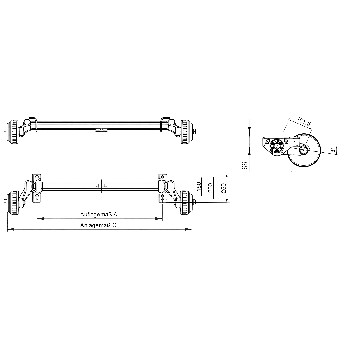
The second key detail is support width. Example products in the 1350 kg B1200-6 range are available with support dimensions from 1000 mm to 1900 mm. This matters because the axle must integrate correctly with the trailer chassis. Incorrect support width can complicate installation and affect overall geometry. For trailer builders and repair workshops, accurate measurement is therefore essential before ordering replacement parts or planning a new build.
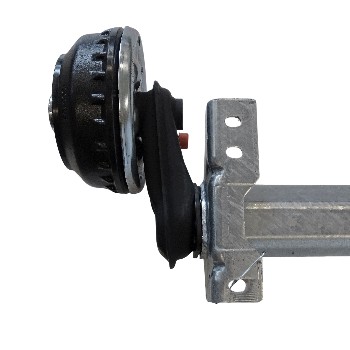
Hub pattern is another practical point. The example products use a 5x112 pattern, a widely recognised configuration in many trailer applications. Matching the bolt pattern correctly ensures wheel compatibility and simplifies the selection of suitable rims and replacement running gear items.
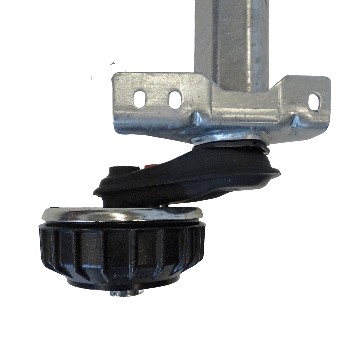
The integrated brake system is of course one of the defining technical advantages. A properly engineered brake assembly helps improve deceleration control under load and supports smoother towing behaviour. Combined with robust hubs, dependable bearings, and durable mechanical interfaces, this creates an axle unit designed for real operating demands rather than occasional light-duty use only.
Material quality also contributes directly to performance. Corrosion resistance is especially important because trailer undercarriages live in a harsh environment. Rainwater, mud, road salt, gravel impact, and long outdoor storage periods all challenge the finish and structural integrity of axle-related components. Durable coatings and carefully manufactured surfaces help protect the investment and maintain serviceability over time.
Manufacturing precision matters as well. A well-made axle assembly supports consistent wheel alignment, balanced load handling, and reduced component stress. This influences tyre life, brake consistency, and running smoothness. In practical terms, precision engineering helps the trailer feel more settled on the road.
Another quality feature is service practicality. Trailer owners and workshops benefit from assemblies that allow routine maintenance without unnecessary complexity. Bearings, brake components, and associated hardware should be accessible enough to support inspections, replacement of wear parts, and general servicing over the life of the trailer.
Finally, ALKO’s established presence in the trailer sector gives many buyers additional confidence. Trusted brands matter in safety-related categories because parts availability, technical familiarity, and workshop experience all influence long-term ownership. For many users, choosing components from a recognised trailer technology manufacturer is not only about brand reputation—it is about minimising uncertainty when safety and durability are important.
Installation and Maintenance
Proper installation is essential if a braked axle is to deliver the performance it was designed for. Even high-quality equipment can underperform if mounting, adjustment, or compatibility are incorrect. For that reason, installation should be carried out by a qualified technician or an experienced trailer specialist whenever there is any doubt.
The process begins with accurate measurement. Before purchasing, confirm axle capacity, support width, fixing positions, hub pattern, brake compatibility, and the relationship between the axle and the trailer chassis. Measure carefully rather than estimating. A few millimetres can matter when aligning mounting points and ensuring wheel clearance.
During installation, the axle must be positioned square to the chassis. Misalignment can lead to uneven tyre wear, compromised towing behaviour, and unnecessary stress on the running gear. Mounting hardware should meet the required specification and be tightened to the correct torque values according to the trailer or component manufacturer’s guidance.
The brake linkage or cable arrangement also requires attention. Integrated braking systems depend on correct adjustment to function smoothly and evenly. If the brake mechanism is too tight, wear may accelerate or the brakes may drag. If too loose, braking response can become weak or delayed. After installation, a full operational check should always be completed before the trailer enters regular service.
Wheel fitment is another important step. Confirm wheel compatibility with the hub pattern—such as 5x112 in the listed examples—and ensure offset, load rating, and tyre specification are suitable for the intended trailer use. Once wheels are fitted, torque settings should be checked again after the initial running period, as recommended in standard workshop practice.
Maintenance should be systematic rather than reactive. At regular intervals, inspect brake cables, drums, hubs, bearings, tyres, wheel nuts, and mounting points. Look for signs of corrosion, wear, impact damage, grease leakage, or irregular operation. A trailer that stands unused for months can develop issues just as easily as one used every day, so seasonal checks are valuable even for occasional users.
Cleaning also plays a role. Mud, salt, and road debris should not be allowed to accumulate around moving parts for long periods. Basic underbody cleaning after winter use or after operating on dirty job sites can help reduce corrosion and extend the life of brake-related hardware.
If You notice symptoms such as pulling under braking, unusual noises, vibration, overheating hubs, or uneven tyre wear, do not postpone inspection. Early attention to small issues often prevents more expensive repairs later. Replacing worn spare parts in time—rather than waiting for complete failure—helps preserve both safety and budget control.
For businesses, planned maintenance is particularly worthwhile. A trailer out of service at the wrong moment can disrupt deliveries, installations, site work, or event logistics. A simple preventive schedule can therefore protect not only the trailer but also Your wider operations.
In the end, installation and maintenance are where engineering quality meets real-world responsibility. A strong axle design provides the foundation, but correct fitment and regular care allow that design to perform as intended year after year.
A Reliable Foundation for Safer, More Confident Towing
When You tow a loaded trailer, peace of mind is never a small detail. It comes from knowing that the components beneath the trailer are built to handle weight, road forces, and repeated braking demands with consistency. Braked ALKO axles offer that reassurance through a combination of solid construction, integrated braking technology, practical fitment options, and dependable long-term durability.
From compact utility trailers to car transporters, horseboxes, and commercial equipment haulers, these axle assemblies support safer handling and more controlled stopping across a wide range of applications. With capacities from 1000 kg to 1800 kg and practical configuration options such as multiple support widths and common wheel bolt patterns, they provide the flexibility needed for both replacement projects and new trailer builds.
If You value stable towing, reduced stress in traffic, and equipment that stands up to regular use, this category deserves close attention. The right axle is not simply another item on a parts list—it is a core part of how safely and confidently Your trailer performs on every journey. By selecting the correct specification, installing it properly, and maintaining it carefully, You create a stronger foundation for transport that feels controlled, professional, and ready for the demands of real life.







 C
C
 C
C
 B | 70db





Comments (0)
back to list Add comment