
Lashing Rails for Secure Cargo Restraint and Transport
Lashing rails are essential components for safe and reliable cargo transport. Also known as tie-down rails, cargo securing rails, and load restraint rails, these systems provide robust anchor points for fastening goods in vehicles, trailers, and storage areas.
- ✔ Enhance load safety and prevent shifting during transit
- ✔ Versatile installation options for various vehicles and spaces
- ✔ Compatible with a wide range of fittings and accessories
- ✔ Durable construction for long-term use
Find the perfect option and order now!
Frequently Asked Questions
Loads must be secured in such a way that they do not slip, tip over or fall off during emergency braking, evasive manoeuvres or on poor road surfaces. This applies to private individuals as well as commercial operators — the driver and the vehicle owner are responsible.
Why simply placing the load on the trailer is not enough: during emergency braking, the forward force exerted on the load is around eight times what many people expect — a 100-kg box will then press against the front wall with a force of several hundred kilograms. The force to the sides and rear is slightly less, but still enough to throw an unsecured load off the trailer.
The three methods
- Form-fit: The load rests directly against the front wall, side walls or other parts of the load, with any gaps filled in. This is the most effective method, as nothing can gain momentum in the first place. Rule of thumb: always push the load forwards against the front wall.
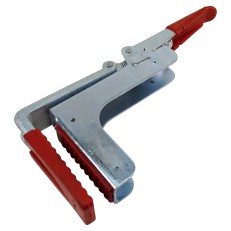
- Lashing down: The strap presses the load onto the load area and increases friction. This only works if the strap is properly tensioned — a strap tightened only loosely is almost useless.
- Direct or diagonal lashing: The strap connects the load diagonally to lashing points and secures it directly. This is the better choice for heavy individual items such as machinery or vehicles.
Anti-slip mats are the most effective and simple aid: they significantly increase the friction between the load and the load bed and considerably reduce the required lashing force. A mat under each contact surface costs little and is very effective.
Lashing points: Straps must be attached to designated lashing eyes, lashing recesses or lashing rails — never to side panel hinges, light strips, handrails or wheel arches. These parts are not designed for this purpose and will tear away. If there are no load-bearing lashing points, the entire securing system is ineffective.
Selecting and checking straps correctly: The label states the permissible lashing force and the pre-tension force. The label must be legible — if it is missing, the strap must no longer be used. Discard straps if they have cuts, frayed edges, broken fibres, deformation or cracks in the ratchet, or if they have been damaged by chemicals or heat. Pad the edges of the load with edge protection; otherwise, the edges will cut into the strap.
Common mistakes in practice:
- Load secured only in the centre, with the front and rear ends free to move
- Straps routed over sharp edges without edge protection
- Too few straps — two straps across a stack are rarely sufficient
- Small parts loose in the trailer, which shoot forwards when braking
- Load ‘secured’ only with a tarpaulin — a tarpaulin provides weather protection, not load securing
Weight and distribution: The load must not exceed either the permissible gross vehicle weight or the permissible drawbar load. Heavy items should be placed over or just in front of the axle — loading at the rear makes the combination unstable, whilst loading right at the front overloads the drawbar load.
Rear overhang: A load of up to 1.5 m is permitted without special marking. Beyond this, marking with a red flag or sign is required; in the dark, a red light and reflector are also required. Forward overhang is permitted only to a very limited extent.
Before setting off, walk all the way round the vehicle and stop again after the first few kilometres: straps settle, particularly with soft or stacked loads, and must then be retightened.
Suitable equipment: lashing straps and webbing, lashing eyes and sockets, lashing rails.

There are no product filters available for current page
{{ filter.fu || tmpValue.vn }}

Product Overview
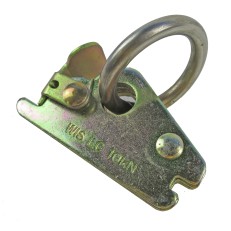
Lashing rails, also referred to as tie-down rails, cargo securing rails, and anchor rails, are specifically designed to provide secure fastening points for transporting goods. These fastening rails are suitable for use in commercial vehicles, trailers, and storage facilities, ensuring that cargo remains stable and protected throughout the journey. With a variety of compatible fittings, such as end fittings and slot nuts, these systems offer flexibility for different load requirements and operational environments.
Key Features & Benefits
Load restraint rails are engineered to withstand demanding conditions, offering a reliable solution for cargo security. Their robust construction ensures durability and resistance to wear, while the modular design allows for easy integration into existing transport setups. By utilizing anchor rails, users can minimize the risk of load movement, reduce damage to goods, and comply with safety regulations. The adaptability of these rails supports a wide range of cargo sizes and shapes, making them a versatile choice for logistics professionals.
Selection Guide
When choosing the right lashing rail system, consider the type of cargo, vehicle configuration, and required load capacity. Options include aluminium airline rails for lightweight applications and combination rails for enhanced versatility. Compatible fittings, such as airline fittings with rings or double fittings, further expand the system’s usability. Assess your specific needs to select the most appropriate fastening rail solution, ensuring both efficiency and safety in cargo handling.
Applications
Lashing rails and their synonyms are widely used in commercial transport, warehousing, and logistics. They are ideal for securing goods in vans, trucks, trailers, and storage units. Whether transporting heavy machinery, delicate equipment, or general freight, these rails provide the necessary anchor points for safe and effective load restraint. Their flexibility and reliability make them indispensable tools for professionals seeking to optimize cargo management and transport safety.
Find the right option now and order online.
Nachrichten Kategorie

Excellent


